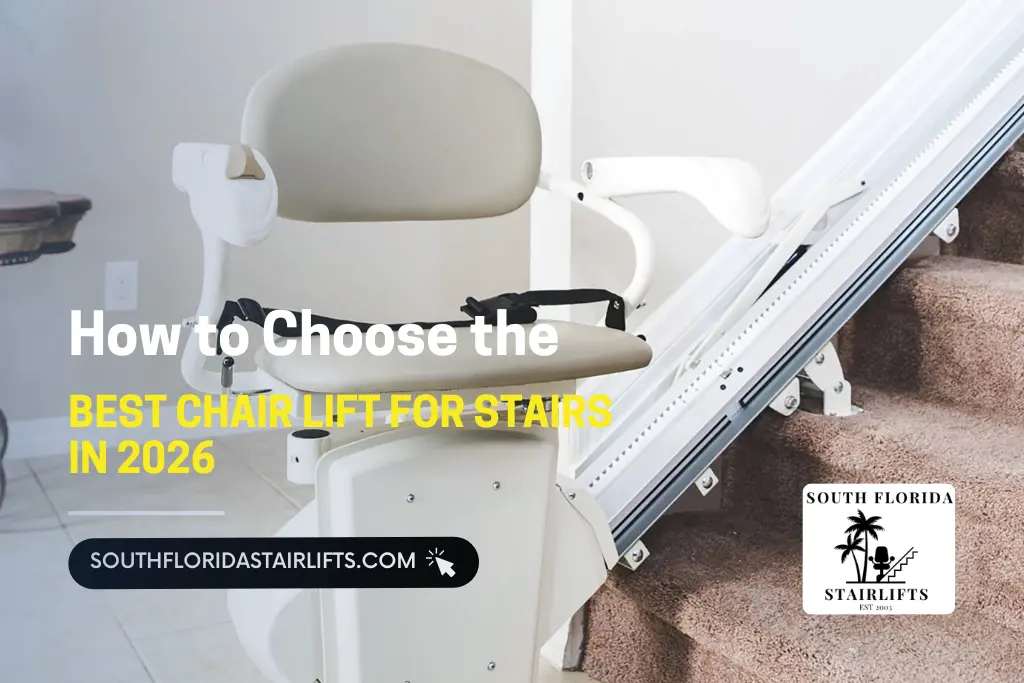
If you or someone you love is finding stairs harder to manage, a chair lift can genuinely change daily life. It restores independence, reduces fall risk, and keeps people in the home they love without the stress of moving or major renovations.
But with so many options on the market in 2026, picking the right one isn’t always straight forward. We’ll walk you through everything you need to know while choosing the best chair lift for your needs.
What Is a Chair Lift and Who Needs One?
A chair lift (also called a stair lift) is a motorized seat that travels along a rail mounted to your staircase. You sit down, press a button, and it carries you smoothly up or down without any effort on your part.
They’re popular with seniors, people recovering from surgery, and anyone dealing with joint pain, balance issues, mobility limitations, or chronic conditions like arthritis, COPD, or MS. If climbing stairs has become painful, slow, or risky, a chair lift is worth serious consideration.
How Do You Choose the Best Chair Lift for Stairs?
Choosing the right chair lift comes down to a few key things: your staircase type, the user’s comfort needs, and the safety features that matter most. It’s not just about picking the cheapest option or the first one you come across.
Take a little time to understand what’s out there, and you’ll end up with a lift that works perfectly for your home and your daily life.
Step 1 : Know Your Staircase Type
Not all chair lifts are created equal, and the first thing you need to figure out is what kind of stairs you’re working with.
Straight stairs are the most common and the easiest to accommodate. These are standard, single-flight staircases with no turns or curves. Chair lifts for straight stairs are widely available, easier to install, and more affordable.
Curved or L-shaped stairs require a custom-built rail that follows the exact path of your staircase. These lifts cost more and take longer to install, but they work beautifully once in place.
Narrow staircases may need a slim-profile model. Most standard chair lifts need at least 28 to 30 inches of staircase width to function safely.
Before you shop, measure your staircase width, note whether it curves, and check if there are any landings or tight corners involved. A good installer will do a full home assessment before recommending anything.
Step 2 : Consider Weight Capacity
Every chair lift has a maximum weight limit, typically ranging from 250 to 400 pounds. Standard models usually cap at around 300 lbs, while heavy-duty or bariatric models go higher.
Always check the weight capacity before purchasing. You want a little buffer above the user’s actual weight to ensure safe, smooth operation for years to come. Using a lift at or near its maximum weight limit consistently can wear it out faster.
Step 3 : Think About Seat and Comfort Features
You or your loved one will use this every day, so comfort genuinely matters. Here’s what to look for:
Seat width and padding : A wider, well-cushioned seat makes a big difference, especially for longer staircases or users with hip issues.
Armrest style: flip-up or retractable armrests are convenient because they allow easier entry and exit and keep the stairs clear for other household members.
Footrest design: A fold-up footrest is safer and takes up less space when the lift is parked.
Swivel seat : This is one of the most important safety features. A swivel seat rotates the user to face the landing before they stand up, dramatically reducing the risk of a fall at the top of the stairs.
Step 4 : Look at Safety Features
Safety should be non-negotiable. In 2026, quality chair lifts come with several standard safety features you should expect:
Seat belt : Basic but essential. It should be easy to fasten and unfasten.
Obstruction sensors : Sensors on the footrest and the rail detect objects in the path of travel and stop the lift automatically.
Remote controls : Most modern lifts come with at least two remotes so the lift can be sent up or down the stairs when not in use, keeping it out of the way.
Battery backup : This is a big one. A battery backup system keeps the lift running during a power outage. In Florida, where hurricanes and power interruptions aren’t uncommon, this feature is especially important.
Speed control : The lift should travel at a steady, controlled speed not too fast, not so slow it’s frustrating. Most quality models move at about 20 feet per minute.
Step 5 : Indoor vs. Outdoor Chair Lifts
Most people assume chair lifts are only for inside the home, but outdoor models exist too. If you have exterior steps leading to your front door, porch, or deck, an outdoor stair lift can be a practical solution.
Outdoor lifts are built with weather-resistant materials, UV protection, and sealed mechanics to handle heat, rain, and humidity. If you live in South Florida, the heat and moisture levels make it critical to choose a model specifically rated for outdoor use.
Step 6 : New vs. Reconditioned Lifts
Brand-new chair lifts offer full warranties, the latest safety features, and custom fitting for your exact staircase. They’re the best long-term investment.
Reconditioned or used lifts are available at lower price points and can be a reasonable option for straight staircases, where a standard rail fits most homes. Just make sure any used lift comes with a warranty, has been properly serviced, and is installed by a certified professional.
Avoid buying a chair lift online without professional installation. Improper installation is a safety hazard.
Step 7 : Understand Costs and Financing
In 2026, here’s a rough idea of what you’re looking at cost-wise:
Straight stair lifts typically run between $2,500 and $5,000 installed. Curved or custom lifts can range from $8,000 to $15,000 or more depending on the complexity of the staircase. Outdoor models usually fall somewhere in the middle.
Many companies offer financing plans, and some veterans’ benefits and long-term care insurance policies cover part of the cost. Medicare generally does not cover stair lifts, but it’s always worth checking with your specific plan.
Step 8 : Choose a Reputable Local Installer
This is where many people go wrong. They find a deal online, buy something, and then struggle to find anyone local to install it properly.
A local specialist matters for several reasons. They can assess your home in person, recommend the right model, handle the installation correctly, and provide ongoing maintenance and support. If something goes wrong with your lift six months from now, you want a local number to call, not an out-of-state call center.
Final Thought
Stairs shouldn’t be a barrier to living comfortably in your own home. Whether you’re planning ahead or dealing with an immediate need, a chair lift is one of the smartest, most practical investments you can make for long-term safety and independence.
The key is not to rush the decision. Take the time to understand your staircase, think about the features that matter most to your situation, and work with someone you trust locally. A chair lift isn’t just a piece of equipment, it’s peace of mind for you and everyone who cares about you.
If you’re in South Florida, don’t hesitate to reach out to South Florida Stair Lifts for honest, pressure-free guidance. They’re there to help you find the right fit, not just make a sale.
Because at the end of the day, staying safe and independent at home is worth every bit of effort it takes to get there.
Frequently Asked Questions
How long does it take to install a chair lift?
Most straight-stair installations are completed in just a few hours. Curved or custom staircase installations can take a full day or sometimes two, depending on complexity.
Can a chair lift be installed on any staircase?
Almost all staircases can accommodate a chair lift, including very steep or narrow ones. A professional assessment will confirm the right solution for your specific setup.
What happens if the power goes out?
Quality chair lifts include a battery backup that allows the lift to complete its current journey and return to the lower level during a power outage. It’s a standard feature in most modern models.
Are chair lifts safe?
Yes , modern chair lifts are engineered with multiple layers of safety features, including obstruction sensors, seat belts, swivel seats, and emergency stop buttons. When properly installed by a certified technician, they are very safe.