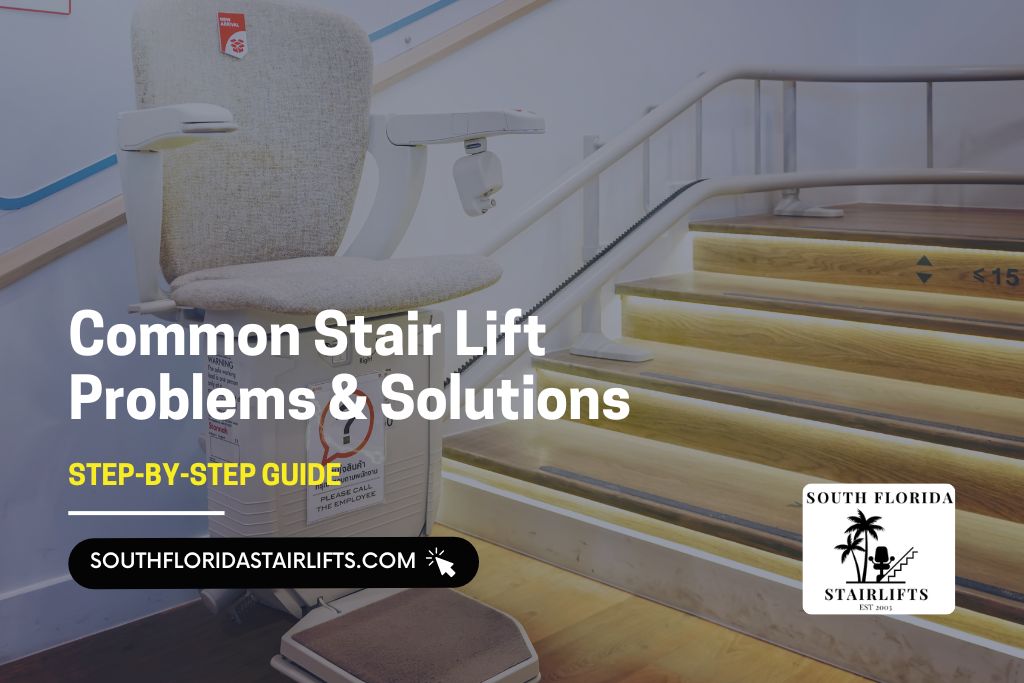
Stair lifts help people with mobility challenges. They provide comfort, safety, and independence on stairs. Like any machine, stair lifts can develop problems.
If your stair lift is not working properly, do not ignore it. Understanding common issues helps you find the cause. It also helps you take the right action.
This article explains common stair lift problems, their causes, and simple solutions. Some issues are minor. Others may need professional stairlift repair. Knowing the warning signs saves time and stress.
Watch for these common stair lift problems:
- Power supply or battery issues
- Track obstructions
- Safety sensor problems
- Swivel seat not locking
- Remote control failure
- Grinding or unusual noises
- Slow or uneven movement
Keep reading to learn how to fix these issues and when to call a professional for repair or maintenance.
What Are the Most Common Stair Lift Problems?
Stair lifts make daily life easier. They improve safety and independence. Like any machine, they can develop problems.
Below are the most common stair lift issues and what to check.
1. Power Supply and Battery Issues (Most Common)
Battery problems are very common. If the battery is low or damaged, the stair lift may stop working.
Always check the charge first. If charging does not fix the issue, the battery may need replacement.
Checklist:
- Make sure the battery is fully charged.
- Replace the battery if it is old or damaged.
2. Obstructions on the Track
Debris on the track can stop the lift. Dirt, dust, or small objects may block movement.
A blocked track can cause sudden stops or uneven travel.
Checklist:
- Inspect the track often.
- Remove dirt and debris.
- Clear any objects in the path.
3. Safety Sensor Activation
Modern stair lifts have safety sensors. These sensors stop the lift if they detect an object.
Dirty or misaligned sensors can cause false stops.
Checklist:
- Clean the sensors regularly.
- Check that sensors are aligned properly.
4. Swivel Seat Not Locked
The seat must lock before use. If it does not lock, it can create a safety risk.
Never use the lift if the seat feels loose.
Checklist:
- Confirm the seat locks securely.
- Inspect the locking mechanism if needed.
5. Remote Control Failures
If the lift does not respond, check the remote first. Dead batteries are a common cause.
If new batteries do not fix the issue, the remote or receiver may need service.
Checklist:
- Replace remote batteries.
- Inspect the remote and receiver if problems continue.
6. Unusual Noises or Grinding
Grinding or squealing sounds often signal wear. Parts may need lubrication.
Ignoring noises can lead to bigger repairs.
Checklist:
- Lubricate moving parts.
- Inspect the motor and track for wear.
7. Slow Operation
Slow movement can signal low battery power. It may also point to motor or track issues.
Address slow performance early to prevent damage.
Checklist:
- Check battery charge.
- Clear the track.
- Inspect the motor if needed.
If problems continue after these checks, contact a professional technician. Early action prevents costly repairs and keeps your stair lift safe and reliable.
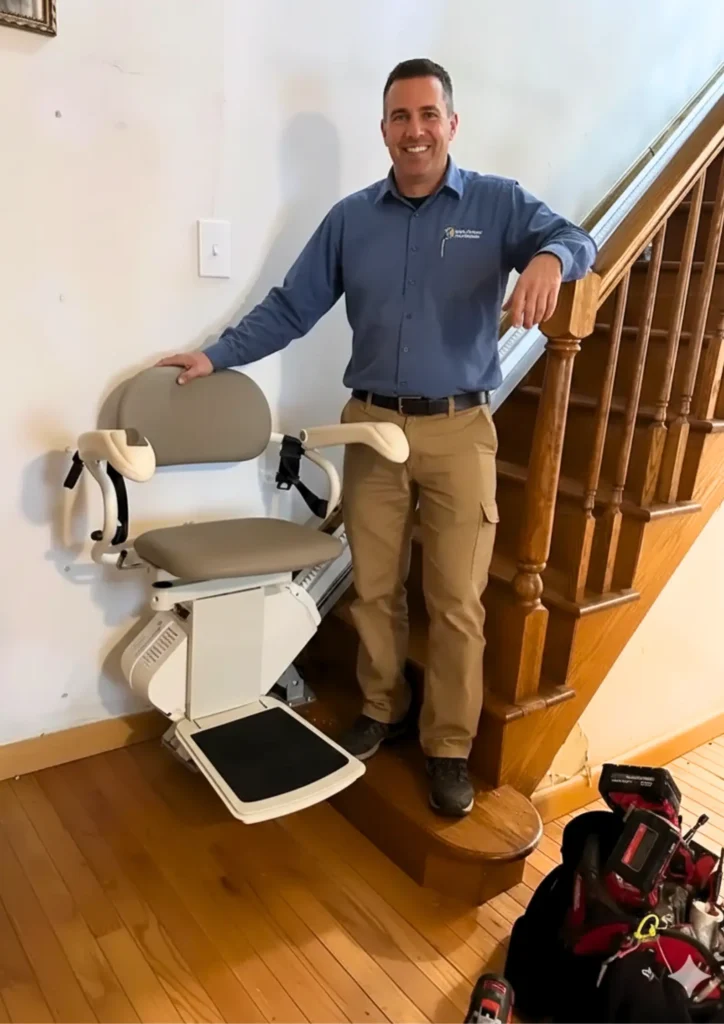
How Does Stair Lift Repair Fix Common Problems?
If your stair lift has problems and basic troubleshooting does not work, call a professional. A repair technician can find the issue and fix it safely. Professional repair restores performance and prevents further damage.
Many companies specialize in stair lift repair and maintenance. With proper service, your stair lift can return to safe and reliable operation.
Call for stair lift repair if you notice:
- The lift will not move or gets stuck
- Strange noises or grinding sounds
- The seat or remote control does not work
- Slow or uneven movement
- Safety sensors not working properly
Common problems often involve the battery, motor, track, or sensors. These parts affect how the lift performs. Ignoring issues can lead to larger repairs later.
Timely repair keeps your stair lift safe and dependable. Regular servicing reduces breakdowns and extends the life of the lift.
The sooner you fix a problem, the easier and less costly it is to repair.
Why Is Regular Stair Lift Maintenance Important for Preventing Issues?
Regular maintenance is crucial to keeping your stair lift in good working order. Just like any other machine, your stair lift needs care to prevent breakdowns and ensure safety. Routine maintenance helps catch small problems before they turn into bigger issues, keeping your stair lift functioning properly and extending its lifespan.
- Helps prevent breakdowns
- Identifies problems early
- Ensures smooth and reliable operation
- Increases the lifespan of the lift
Scheduling regular maintenance is an easy way to avoid unexpected repairs and ensure your stair lift continues to operate smoothly for years to come.
How to Troubleshoot Basic Stair Lift Issues?
If your stairlift isn’t working properly, there are a few things you can check before calling a professional. Here’s what you can do:
- Check the Power Supply: Ensure the lift is plugged in, and the battery is charged.
- Clear the Track: Look for any debris or obstacles on the track that might be blocking the lift.
- Inspect the Remote Control: Make sure the remote control has fresh batteries and is working properly.
If these basic steps don’t resolve the issue, it may be time to call in a professional technician.
When to Call a Professional for Stair Lift Service
Basic troubleshooting can fix small issues. Some problems require professional service.
Call a technician if the lift still does not work after checking the power supply, track, and remote. Strange noises are also a warning sign.
Call for professional service if you notice:
- Grinding or unusual noises
- The lift still does not work after basic checks
- Ongoing problems with the motor
- Safety sensors not working properly
- Track alignment issues
A professional technician can inspect the motor, sensors, and other key parts. They ensure the lift operates safely and correctly.
For expert service, contact South Florida Stairlifts for reliable stair lift repair and maintenance. Early service prevents bigger problems and keeps your lift running smoothly.
FAQs
What Are the Signs That My Stair Lift Needs Repair?
Your stair lift may need repair if:
- It will not move or gets stuck
- It makes grinding or unusual noises
- The seat or remote control does not work
- It moves slower than normal
- The safety sensors are not working properly
Can I Fix Stair Lift Problems Myself?
You can fix small issues. For example, replace remote batteries or clear debris from the track.
More serious problems, such as motor or electrical issues, require a professional technician. Attempting major repairs yourself can cause more damage.
How Often Should I Schedule Stair Lift Maintenance?
Schedule professional maintenance at least once a year.
If you use the lift daily or notice problems, more frequent service may be needed.
What Should I Do if My Stair Lift Stops Working Completely?
First, check the battery charge. Make sure the lift is plugged in. Inspect the track for obstructions.
If the lift still does not work, contact a professional technician for inspection and repair.
How Much Does Professional Stair Lift Repair Cost?
Repair costs vary based on the issue. Simple repairs cost less than complex motor or electrical repairs.
For an accurate estimate, contact a professional technician to evaluate the problem.