
Stairlifts offer invaluable support for individuals with mobility challenges, but just like any other machine, they need regular care to function at their best.
Have you ever wondered how to keep your stairlift running smoothly and avoid unexpected repairs?
Without proper maintenance, your stairlift’s performance can decrease, causing discomfort and potentially costly fixes.
Here’s how to ensure your stairlift stays in top shape, maximizing its lifespan and efficiency:
- Prevent slow movement and strange noises.
- Avoid expensive repairs with routine servicing.
- Ensure smooth operation for daily comfort.
- Maintain safety by addressing issues early.
- Extend the lifespan of your stairlift with simple daily checks.
Simple, consistent care keeps your stairlift working like new, ensuring it remains a reliable part of your home.
Why Is Stairlift Servicing Essential for Performance?
Stairlifts are designed to provide essential mobility support, but just like any other mechanical device, they need regular attention to keep functioning optimally.
Without proper servicing, your stairlift’s efficiency can decline, leading to unexpected breakdowns, discomfort, and potentially costly repairs.
Regular checks ensure all components from the motor to the track and battery are in good working order, extending the stairlift’s life and performance.
Here’s why staying on top of stairlift servicing matters:
- Improves Safety: Regular maintenance ensures your stairlift is functioning safely, lowering the risk of accidents and mechanical failures.
- Boosts Efficiency: Servicing helps your stairlift move smoothly without issues like slow speed or noisy operation.
- Prevents Expensive Repairs: Timely checks can identify small problems before they become major and expensive.
- Increases Longevity: Routine maintenance helps your stairlift last longer, saving you from costly replacements.
- Ensures Consistent Performance: Servicing ensures that the key parts motor, track, and battery remain in top condition, preventing interruptions in usage.
Routine stairlift servicing is key to maintaining its reliability and smooth operation, ensuring it continues to be a valuable asset in your home.
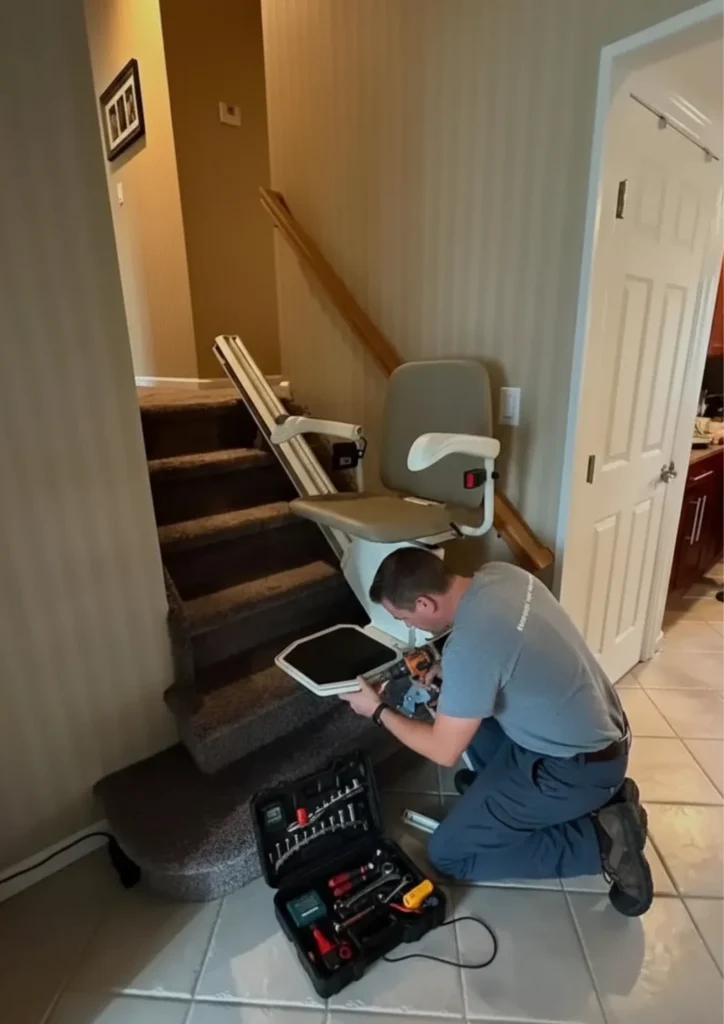
Benefits of Regular Stairlift Servicing
Regularly maintaining your stairlift offers more than just convenience; it plays a key role in ensuring its efficiency, safety, and durability.
Keeping up with scheduled servicing can prevent issues before they arise, providing long-term benefits. Here’s why consistent maintenance is so valuable:
- Enhanced Safety and Reliability: A well-serviced stairlift reduces the risk of sudden breakdowns and accidents, ensuring it operates safely when you need it most. Regular checks identify potential safety hazards early, giving you peace of mind.
- Improved Performance and Comfort: Routine servicing helps keep your stairlift functioning at peak performance. It ensures smooth movement, prevents jerky motions, and addresses issues like strange noises, making your daily use more comfortable and efficient.
- Cost-Effective Solution: Small issues, if left unchecked, can turn into expensive repairs or replacements. By servicing your stairlift on a regular basis, you catch problems early, preventing major repairs and saving money in the long run.
- Increased Longevity: Like any machine, your stairlift’s lifespan is greatly influenced by how well it’s cared for. Regular servicing helps to extend its life, allowing you to enjoy reliable performance for years to come.
- Better Battery Life: Maintaining the battery is a critical part of servicing your stairlift. Regular checks ensure it’s charged correctly, reducing the risk of unexpected stoppages and prolonging battery life.
Incorporating regular stairlift servicing into your home care routine is an investment that ensures your stairlift remains reliable, safe, and efficient, minimizing the chances of disruptions or costly repairs.
What Are the Signs That Your Stairlift Needs Maintaining?
Your stairlift is key to your daily mobility, so keeping it in good shape is important for your safety and comfort. If you notice strange noises like grinding or squeaking, it may mean something’s wrong with the motor or track. Jerky or slow movement could signal an issue with the motor or battery.
Beeping sounds or flashing lights usually mean the battery is low or there’s a sensor problem.
If your stairlift stops mid-ride, it could indicate a mechanical or power issue. Loose parts, like a wobbly armrest, also need attention. Visible damage to the track, like rust or dirt, can disrupt smooth movement. Watching for these signs can help you prevent bigger problems and keep your stairlift working safely.
Strange Noises
If your stairlift makes strange noises, it’s a sign that something may be wrong. Grinding or squeaking sounds are often linked to issues with the motor or track.
- Listen for unusual sounds when the stairlift is in use.
- Grinding noises may indicate worn gears or a misaligned track.
- Squeaking sounds could suggest friction between moving parts.
Addressing these noises early can prevent more serious mechanical issues, ensuring smooth operation.
Jerky or Slow Movement
Jerky or slow movement can affect your stairlift’s efficiency and comfort. This issue is often caused by motor problems or a weak battery.
- Check the speed of the stairlift during use.
- Slow movement may be linked to low battery power.
- Jerky motion can result from issues with the motor or track.
If you notice inconsistent movement, servicing your stairlift can help restore smooth performance.
Beeping or Warning Lights
Beeping sounds or flashing warning lights are typically indicators of a problem. These signals often point to a low battery or a malfunctioning sensor.
- Beeping can indicate low battery or power issues.
- Warning lights usually signal a sensor or electrical problem.
- Regularly check your stairlift’s control panel for alerts.
Addressing these warnings quickly ensures that your stairlift remains reliable and functional.
Stopping Mid-Travel
If your stairlift stops unexpectedly while in use, it’s a sign of a potential power or mechanical issue. This can disrupt your daily routine.
- Stopping mid-travel may be caused by a battery failure.
- Mechanical issues like a jammed track can also cause interruptions.
- Loose components may also contribute to sudden stops.
Immediate attention to this problem can prevent longer periods of downtime.
Loose Components
Loose parts can cause instability and safety concerns. If your stairlift’s components, like armrests or footrests, feel loose, they need to be fixed.
- Check for loose bolts or screws regularly.
- Loose parts can cause discomfort and affect safety.
- A wobbly armrest may signal the need for tightening or repair.
Fixing loose components helps maintain the stairlift’s stability and ensures safe usage.
Visible Wear on the Track
Visible damage on the track, such as rust or dirt, can slow down the stairlift’s performance. Keeping the track clean and well-maintained is essential.
- Inspect the track for any rust, dirt, or damage.
- A dirty or rusted track can cause the stairlift to move unevenly.
- Regular cleaning prevents build-up and ensures smooth travel.
Maintaining the track is crucial to keeping your stairlift operating like new.
How Do I Keep My Stairlift Clean and Charged Every Day?
To ensure your stairlift operates smoothly, it’s important to clean and charge it regularly. Start by wiping down the track and lift components to remove dust and debris. A clean track reduces friction and helps maintain smooth movement.
Charge the battery fully at the end of each day to ensure it’s always ready for use. This will extend battery life and keep your stairlift performing efficiently.
What Should I Inspect Myself Every Month?
Regular checks can help you catch potential issues early and avoid costly repairs. Here’s what you should inspect every month:
- Track and Rail: Look for any visible signs of damage or dirt.
- Battery: Check for any signs of wear or if the stairlift is running slower than usual.
- Components: Tighten any loose parts, like armrests or footrests, to ensure stability and safety.
By doing this, you can prevent many common issues before they cause serious problems.
How Long Do Stairlift Batteries Last and How Do I Maintain Them?
Stairlift batteries typically last 2-5 years, depending on usage and maintenance. To extend battery life, follow these tips:
- Charge the battery fully at least once a day.
- Avoid leaving the stairlift unused for long periods.
- Check the battery regularly for any signs of damage or wear.
Maintaining a healthy battery ensures your stairlift performs reliably without interruptions.
How Much Does Professional Stairlift Maintenance Typically Cost?
The cost varies depending on the provider, service plan, and frequency of visits. Most companies offer annual maintenance plans designed to keep your stairlift safe and reliable.
What’s Typically Included:
- Routine safety inspections
- Cleaning and lubrication of mechanical parts
- Battery checks and replacement if needed
- Testing of safety features (seat belts, sensors, emergency stop)
- Minor adjustments to ensure smooth operation
Optional Add-Ons:
- Priority or same-day service
- Extended warranties
- Emergency visits
Maintenance plans help extend the life of your stairlift and ensure it continues to operate safely and efficiently.
Maintain Your Stairlift for Optimal Performance with South Florida Stair Lifts
Proper stairlift maintenance is essential for ensuring safety, comfort, and longevity. By following a regular maintenance routine, you can avoid costly repairs and keep your stairlift running smoothly.
For expert stairlift service in South Florida, trust South Florida Stair Lifts to provide top-notch maintenance and repair services. Contact us today for reliable and affordable stairlift care!
FAQs: Common Questions About Stairlift Maintenance
How Much Electricity Does a Stairlift Use?
Stairlifts are energy-efficient and typically use about 0.5 to 1 kWh per day, which is minimal. Their electricity consumption is comparable to that of a small household appliance.
Is Annual Service Required for Warranty?
Most stairlift warranties require annual servicing to remain valid. Regular maintenance helps keep the lift running efficiently and ensures you are covered under warranty.
What If My Stairlift Is Under Warranty – Can I Repair Myself?
It’s generally recommended not to perform repairs yourself while under warranty. Unauthorized repairs could void the warranty. Always call a professional technician for any issues.
How Do I Know When to Call a Professional Immediately?
If your stairlift stops working mid-use, makes unusual noises, or shows warning lights, it’s time to call a professional immediately. These could indicate serious mechanical or electrical issues.
Are There Differences in Maintenance for Straight vs. Curved Stairlifts?
Yes, curved stairlifts may require more frequent inspections and maintenance due to their complex track systems. Straight stairlifts have simpler tracks, but both need regular care to function optimally.